Key Areas of Focus in Korea for 2026
 Share
Share Share
Share Share
Share
2025 was a year of real progress for Z Venture Capital (ZVC). We grew meaningfully across investment scale, geographic reach, and focus areas—investing in 51 companies, launching ZVC Fund II, and opening our San Francisco office. These milestones strengthened our ability to partner with founders around the world and support them over the long term.
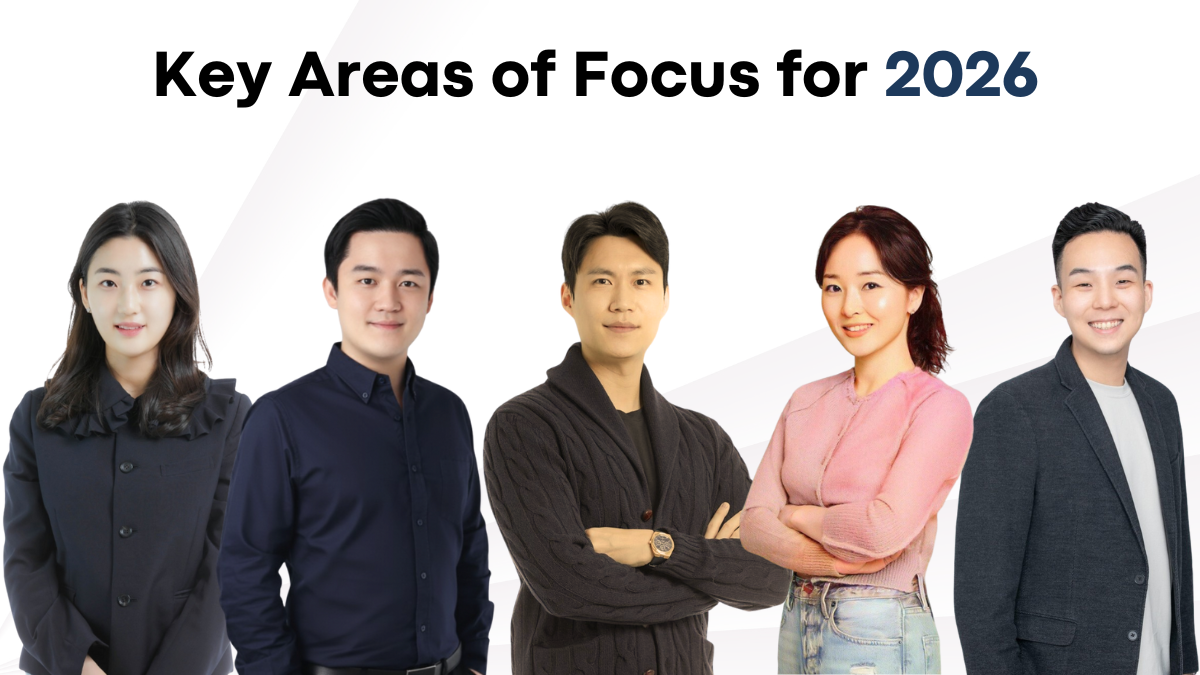
With this foundation in place, how is ZVC thinking about the year ahead? In this column series, investment team members from each region share the themes and sectors they are focused on in 2026, shaped by close engagement with founders and insights from their local ecosystems. In this second installment, we turn our attention to South Korea.
Read the first article from the Japan team here
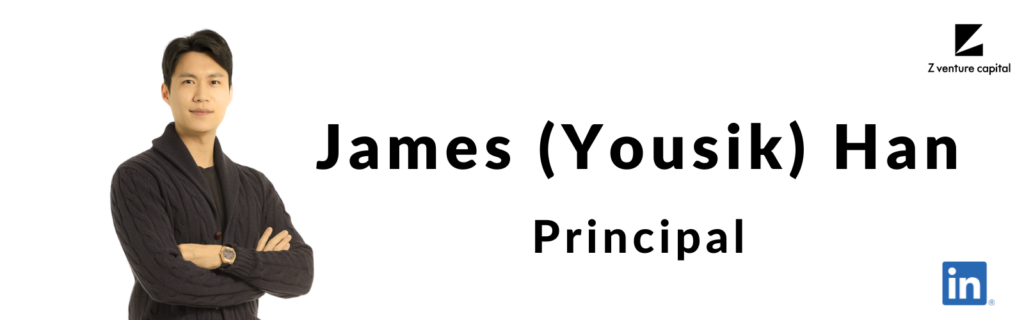
Architecting the Future: The 2026 Mandate
As we look toward 2026—the Year of the Horse—we are redefining our strategic lens to capture value not only at the frontier of innovation but also within the bedrock of the industrial economy.
Korea’s status as a digital powerhouse, bolstered by sustained public and private capital deployment into semiconductors, AI, and advanced network infrastructure, provides a robust foundation for this thesis. Against this backdrop, our investment focus will compound around three core pillars, complemented by a deliberate expansion into "hidden gems" within overlooked, non-iconic categories.
1. Transforming the Borders of Large Markets
We seek opportunities at the intersection of large markets undergoing technology-driven structural shifts. Rather than chasing fully formed "hot" themes, we target critical pain points emerging in legacy value chains forced to modernize: aging logistics infrastructure, regulation-heavy service sectors, and analog workflows in healthcare, manufacturing, and finance.
As Korea accelerates its digital transformation, these pressure points are intensifying. We target teams building indispensable products that integrate seamlessly into existing value chains, creating high switching costs and defensible moats without requiring wholesale behavioral changes from end users.
2. Foundational Cross-Cutting Technologies
We prioritize enabling technologies capable of powering a broad spectrum of networks. In Korea, this encompasses AI infrastructure, data tooling, connectivity orchestration, cybersecurity, and vertical middleware.
These assets benefit from diversified demand across multiple end markets and offer scalability beyond Korea as global standards evolve. The rapid emergence of domestic AI models and solution providers underscores the breadth of this opportunity. Our bias is toward companies that own critical "choke points" in data pipelines and operational tooling, rather than single-use applications susceptible to rapid commoditization.
3. The "Make in Korea — Go Global" Mandate
We champion a model of building domestically on Korea’s deep technical and manufacturing capabilities while architecting for international scale from inception. We favor founders who convert Korea’s strengths in hardware, robotics, energy efficiency, and digital content into globally relevant solutions.
This approach aligns with national strategies for manufacturing innovation, creating strong public-private synergy. Global scalability will be validated not just by technical merit, but by product architecture and pricing models designed to travel across regions.
Strategic Expansion: The "Essential Value" Initiative
Our evolving thesis embraces a counter-intuitive expansion into optically quiet but economically vital businesses. We target "boring and unsexy" sectors that: (1) solve essential problems embedded in daily operations; (2) serve markets with structurally steady, recurring demand; and (3) operate in niches overlooked by generalist capital, offering rational entry valuations and less competitive density.
Examples include workflow digitization for legacy industries, regulatory compliance infrastructure, and industrial maintenance automation. This focus leverages Korea’s historical strength in process-centric innovation to drive outsized productivity gains.
In sum, our 2026 portfolio will reflect a barbell strategy: active investment in the high-growth foundational technologies redefining global infrastructure, balanced by calculated entry into the undervalued, essential service sectors that sustain the economy. By fusing the explosive potential of Korean-engineered deep tech with the resilience of practical industrial digitization, Z Venture Capital is poised to define the next generation of global market leaders.

With Korea’s GDP growth stalling, the pressures of a shrinking population and rising costs have shifted from future risks to immediate operational hurdles. I believe the solution lies in two distinct moves: maximizing efficiency through technology and capturing global demand.
For 2026, my investment thesis focuses on two pillars:
・Pragmatic Robotics
・Global Infrastructure for K-premium
1. Pragmatic Robotics— “Robots that work today, not dream of tomorrow”
While Humanoids and General AI dominate headlines, I prioritize commercial viability. In a rapidly shifting AI landscape, the most resilient value lies in tangible execution and a deep understanding of the industry’s immediate needs.
・Closing the "Efficiency Gap" in Legacy Fields:
Despite the wave of digital transformation, massive inefficiencies remain in traditional sectors. I am hunting for robotics solutions that replace simple, repetitive physical labor with high-reliability hardware and localized AI, ensuring an immediate ROI for the end-user.
・Credit for Commercial Validation:
I prioritize startups beyond the PoC stage that demonstrate market validation through actual revenue. My focus is on "Vertical Robotics" solving high-friction, specific problems—offering solid unit economics and a clear value proposition from Day 1 of adoption.
2. Global Infrastructure for “K-Premium"
The domestic market’s saturation is a reality. However, this is being offset by a record influx of foreign nationals and a global appetite for K-brands. Driven by a favorable exchange rate and cultural soft power, I believe this is a permanent evolution of our economic landscape.
・Monetizing Global Demand:
I see significant upside in products and services that cater to the foreign demographic both within and outside our borders. The "K-brand" now commands a premium, allowing for higher margins and a much broader reach than ever before.
・Investing in the "Enablers":
Rather than betting on a single consumer brand or a specific food product, I am looking for the infrastructure enabling this global flow—such as MarTech that optimize global distribution, data-driven retail networks, cross-border payments, and AI-driven one-stop service platforms.
2026 will be the year of the 'Great Filter'—separating companies built on cheap capital from those built on structural necessity.
My goal is simple: to back founders who turn our national hurdles into an 'unfair advantage.' If you are building the 'working hands' of industries or the 'digital bridges' for our globalized market, let’s talk. I am ready to bet on the practical innovations that will define Korea’s next decade.
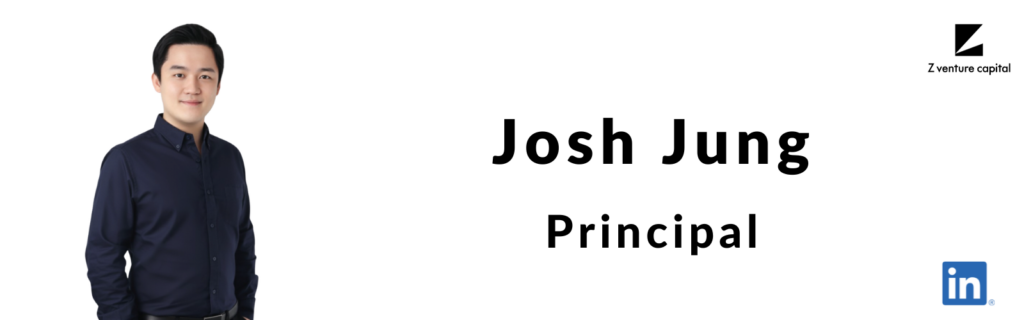
1. New AI Hardware / Data Infra / RAG
Thesis:
Compute and data infrastructure are becoming strategic national assets. Korea can compound its strengths in memory, semiconductors, and data centers into exportable AI infra.
Why it matters now
・Explosive demand for AI compute is driving custom chips, edge accelerators and specialized infra
・Vector databases are becoming critical infrastructure because modern AI applications—especially retrieval-augmented generation and agentic systems—need to store and search high-dimensional embeddings (of text, images, users, events) in real time, something traditional relational databases were never designed to do at scale.
・AI data centers are hitting power-density limits, pushing adoption of immersion/liquid cooling and advanced power/thermal management, all markets growing at strong double-digit CAGRs toward 2030.
・Korea’s policy and corporate landscape (Samsung, SK Hynix, hyperscalers, new AI DC projects) increasingly treats AI clusters and AI data centers as national infrastructure, creating a favorable environment for infra startups.
Focus areas
・Edge AI chips / accelerators for devices, industrial, and automotive.
・In-memory / near-memory computing / CXL
・Vector DBs and retrieval infra(RAG) as core components of enterprise AI.
・Data-center enabling tech: liquid/immersion cooling, power systems, high-speed interconnects, and dynamic GPU virtualization/orchestration.
・Quantum computing
2. Vertical / Agentic AI for Enterprise
Thesis:
Horizontal foundation models will remain US-led, but vertical and agentic AI in regulated, data-sensitive sectors will be won locally. Korea’s regulatory environment and language/data specificity create a structural opening.
Priority verticals in Korea
・Defense / national security: intelligence fusion, simulation, cyber defense agents.
・Legal: contract review, case prep, compliance workflows.
・Fintech / banking: underwriting, AML/fraud monitoring, document automation.
・Healthcare: clinical documentation, imaging triage, hospital ops optimization.
・Advertising & media: campaign planning and creative agents, with added demand from new obligations to clearly label AI-generated content.
3. AI-Native/Enabled SaaS (Korea-First)
Thesis:
In Korea, AI services scale when they ride on (1) an existing strong user base, (2) a clear, repetitive use case, (3) a proven business model.
“AI layers on top of working SaaS” are more attractive than net-new horizontal AI apps. In practice, AI features that enhance existing SaaS (automation, prediction, personalization) see better retention and willingness to pay than standalone AI tools.
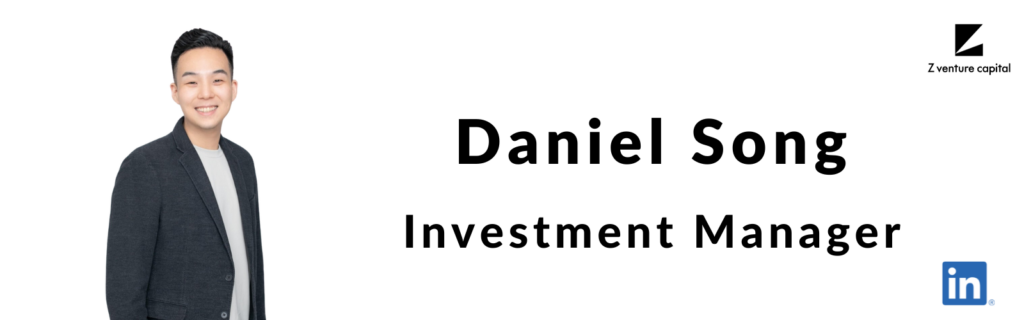
Investing in Taiwan: The Next Phase of Industrial Intelligence
As global production systems face rising costs, tighter margins, and increasing complexity, Taiwan has become a compelling market for manufacturing AI, where durable value is created by embedding intelligence across the manufacturing lifecycle.
1. Manufacturing AI across the production lifecycle
The most effective platforms operate across both physical and digital environments, integrating software with sensors, simulation, and automation.
By improving decision making across design, process optimization, quality control, and production, these systems deliver measurable gains across a wide range of manufacturing contexts.
2. Platforms built to scale across global manufacturing systems
Taiwan’s manufacturers operate at the center of global supply chains within one of the world’s most dense and advanced production ecosystems. This enables AI platforms to be tested and refined locally across diverse environments before scaling globally.
Software layers such as intelligent inspection, digital twins, and manufacturing operating systems can be embedded locally, then expand naturally.
Taiwan’s manufacturing depth, data richness, and system level expertise position it well to produce globally relevant platforms that quietly reshape how industrial systems are designed, built, and operated.
Investing in Southeast Asia Fintech: AI Built Close to the Ground
In Southeast Asia, I believe the valuable fintech opportunities will emerge when AI is built into local financial behavior, regulatory structures, and data environments. As adoption deepens, durable value is created by systems that operate close to the ground, learning from local data and turning complexity into scalable infrastructure.
1. Agentic AI payments for complex commerce ecosystems
There is growing interest in agentic AI payment infrastructure that initiate and execute agent-led payments across an interconnected ecosystem of local and regional commerce platforms.
The opportunity lies in systems that intelligently orchestrate payment flows across Southeast Asia, adapting in real time to local methods, regulations, and diverse e-commerce environments.
2. AI driven credit infrastructure beyond traditional underwriting
Credit scoring and underwriting automation are core themes as digital lending scales. The most compelling platforms go beyond analysis, using AI agents to surface new data points while combining deep local data with automation across underwriting, fraud, and compliance.
In Southeast Asia, fintech value will increasingly accrue to AI platforms that go deep into local systems and quietly become essential infrastructure.
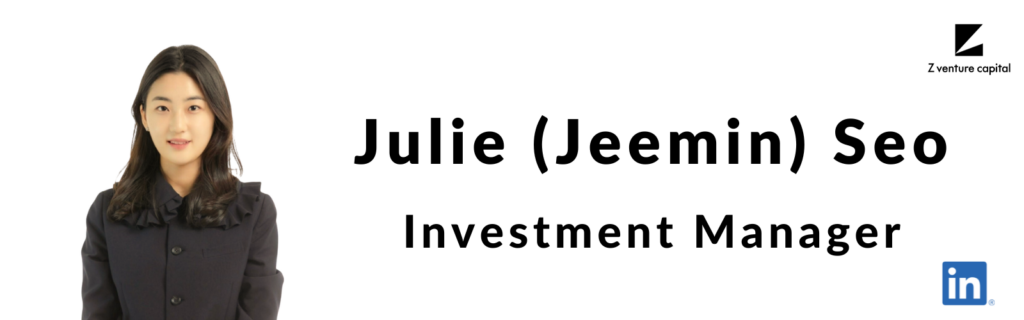
――“Betting on Korea’s Structural Reality”
Our 2026 investment thesis is grounded in a clear belief: some of the most meaningful startup opportunities in Korea will emerge from confronting its structural challenges head-on, while others will come from fully leveraging what the country already does exceptionally well.
First, we are keenly interested in founders that turn Korea’s demographic and societal shifts into new sources of growth. Korea is one of the fastest-aging societies in the world, and this reality presents not only challenge, but opportunities.
We see strong opportunities in longevity and healthspan extension, such as technologies and services that enable people to remain healthy, productive, and independent for longer.
As the definition of ‘retirement’ evolves, we believe this will open up new developments for audience that has historically been underserved by technology startups.
Second, we actively seek companies that maximize Korea’s industrial strengths. Korea has built global leadership in manufacturing and heavy industries over decades, resulting in deep reservoirs of operational know-how, process data, and on-the-ground experience.
We are interested in teams building “knowledge brains”, where hardware, data, and software reinforce one another to create built-to-last competitive advantages.
While themes help guide our focus, they do not define our boundaries - We remain highly open to exceptional teams with strong mission and vision, even if they fall outside our predefined areas of interest.
We believe that enduring companies are often built by long bearing founders who possess deep self conviction, a clear sense of purpose, and the ability to articulate why their work matters in the long run. When we encounter such teams—especially those combining technical excellence with real-world craft and execution—we want to listen, learn, and engage.
Please also take a look at our article on our investment performance in 2025.